
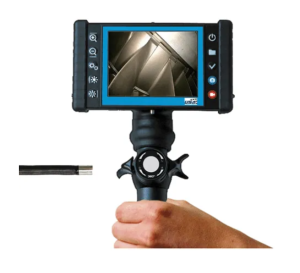
A borescope is already a powerful tool: it lets you see inside machines and structures without taking them apart. But a measuring borescope adds something that many teams eventually realize they need – scale. Once you can measure a defect’s length, depth, or area, inspection stops being about spotting something and more about documenting and making a decision.
That shift has driven adoption far beyond one niche. Today, measuring borescopes show up anywhere equipment is expensive, downtime is painful, and internal access is limited. Companies such as USA Borescopes support a wide range of inspection programs with equipment options tailored to different environments, access constraints, and reporting needs.
Below are the industries most commonly leveraging measuring borescopes – plus what they’re measuring and why it matters.
Aerospace and Aviation
Aerospace is one of the most measurement-driven inspection environments, largely because the difference between monitor and repair now often hinges on a defect’s size and progression.
Common inspection targets include:
- Turbine blades and vanes
- Combustor sections and liners
- Compressor stages
- Gearboxes and internal cavities
- Engine casings and tight passageways
What measurement helps clarify:
- Crack length and orientation
- Pit depth and corrosion severity
- Nicks and edge breaks
- Erosion boundaries
- Coating loss progression
Measurement also supports consistent documentation for engineering review and future trending. When a team can capture a repeatable view and attach a dimension to it, it becomes much easier to compare findings across inspections and avoid debate based purely on appearance.
Why Measurement Matters More Than Looks Fine
Looks fine is rarely the standard that drives maintenance decisions – especially when borderline damage is involved. A measuring borescope helps teams replace subjective judgment with recorded dimensions, which improves communication across technicians, QA, and engineering. Even when a procedure ultimately dictates the outcome, measurement strengthens the record and reduces the need for repeat inspections.
Automotive and Motorsports
In automotive shops – especially high-performance, fleet maintenance, and motorsports – borescopes are often used to confirm internal condition without a full teardown. Measuring borescopes elevate that workflow by providing quantifiable information when deciding whether to rebuild, repair, or keep running.
Common use cases include:
- Cylinder walls and scoring patterns
- Valve and seat condition
- Piston crown damage
- Turbocharger internals
- Intake/exhaust passage inspection
Why measurement is useful:
- Quantifying a defect can help determine severity without guesswork.
- Measurements support consistent recommendations across technicians.
- Trend comparisons help evaluate whether the condition is stable or degrading.
Even in less regulated environments, measurement helps shops justify decisions to customers or internal stakeholders with clearer documentation.
Power Generation
Power generation equipment often operates under high thermal and mechanical stress, and outages can be costly to schedule and execute. Measuring borescopes are used to make outage planning more informed by documenting internal conditions accurately.
Common inspection targets include:
- Gas turbine hot section components
- Steam turbine internals (as applicable to access)
- Heat recovery system areas and confined cavities
- Auxiliary equipment where internal access is limited
Where measurement adds value:
- Determining whether a defect is actionable during a planned outage
- Documenting defect size for repair planning and parts allocation
- Tracking changes over operating intervals
In these environments, measurement helps teams align inspection results with maintenance planning – reducing surprise work and improving scheduling accuracy.
Oil & Gas and Petrochemical
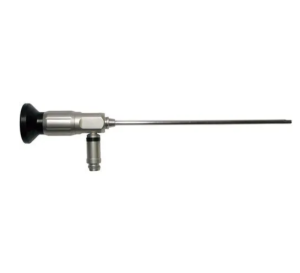
In oil & gas and petrochemical facilities, internal inspection is often about understanding corrosion, pitting, and mechanical wear in confined spaces – sometimes in areas where shutting down equipment or opening systems is expensive.
Measuring borescopes can support:
- Pitting and localized corrosion assessment
- Weld inspection in hard-to-reach areas
- Internal condition checks in piping or components with limited access
- Verification after cleaning or maintenance
Measurement helps teams go beyond corrosion observed to corrosion documented, which improves severity assessment and can support consistency across inspection intervals.
Manufacturing and Machining
In manufacturing, defects and deviations aren’t just maintenance issues – they can become quality problems, rework costs, or scrap. Measuring borescopes are useful where defects occur inside features that are hard to inspect with line-of-sight tools.
Common applications include:
- Casting inspection in internal cavities
- Weld root and internal weld quality checks
- Mold and tooling cavity inspections
- Internal burrs or edge breaks
- Hard-to-see damage in machined channels
Measurement helps by:
- Quantifying defect dimensions for disposition decisions (accept, rework, scrap)
- Documenting findings for quality records
- Reducing subjective assessment across inspectors
For some teams, measurement becomes an important bridge between visual inspection and downstream metrology – especially when full CMM access isn’t practical for internal features.
Facility Maintenance, Plumbing, and Pipe Inspection
Not all measuring inspection happens in high-end machinery. In facility maintenance, inspection cameras are frequently used to locate issues inside walls, drains, HVAC pathways, and piping. When measurement is available, it can add practical value in estimating repair scope and documenting conditions.
Use cases may include:
- Measuring the approximate area of damage or obstruction
- Documenting defect size for maintenance planning
- Supporting communication between technicians and decision-makers
In these settings, the benefits tend to be less about micro-precision and more about capturing enough detail and scale to plan the job efficiently and avoid unnecessary demolition or exploratory work.
Marine, Rail, and Heavy Equipment
Heavy-duty equipment is built to last, but the internal components still experience wear, impact damage, and corrosion – often in environments where contamination and access challenges are the norm.
Measuring borescopes support inspections in:
- Large engines and gear housings
- Structural cavities and sealed components
- Turbos, manifolds, and internal passages
- Equipment where downtime affects operations directly
Measurement helps standardize condition assessment across technicians and sites, especially when decisions involve repair thresholds or monitoring progression.
The Common Thread Across Industries
Across aerospace, automotive, energy, industrial processing, and heavy equipment, the pattern is consistent:
- Access is limited (internal pathways, tight cavities, complex geometry)
- Decisions are expensive (downtime, repair cost, scheduling impact)
- Visual confirmation isn’t enough (teams need defect size and trend data)
Measuring borescopes add value because they turn internal inspection into something more actionable: a record with dimensions that can be reviewed, compared, and used to make consistent calls.
Measurement Turns Inspection Into a Decision Tool
Measuring borescopes are used across industries because they solve a common problem: you can’t always afford to disassemble equipment just to understand internal conditions. When the decision depends on size, depth, area, or change over time, measurement turns a visual finding into something you can act on.
For teams evaluating equipment options, USA Borescopes provides inspection solutions used across multiple industries and offers a wide selection of tools and accessories on their products page. If you’d like help matching a system to your application and access constraints, you can contact USA Borescopes to discuss what fits your inspection goals.
About the Author
The author is an independent inspection and reliability specialist who has supported remote visual inspection programs across industrial, energy, and transportation sectors. They focus on practical tool selection, consistent measurement technique, and documentation workflows that improve maintenance decisions. The author is not affiliated with any manufacturer or distributor and writes from a field-first perspective.