

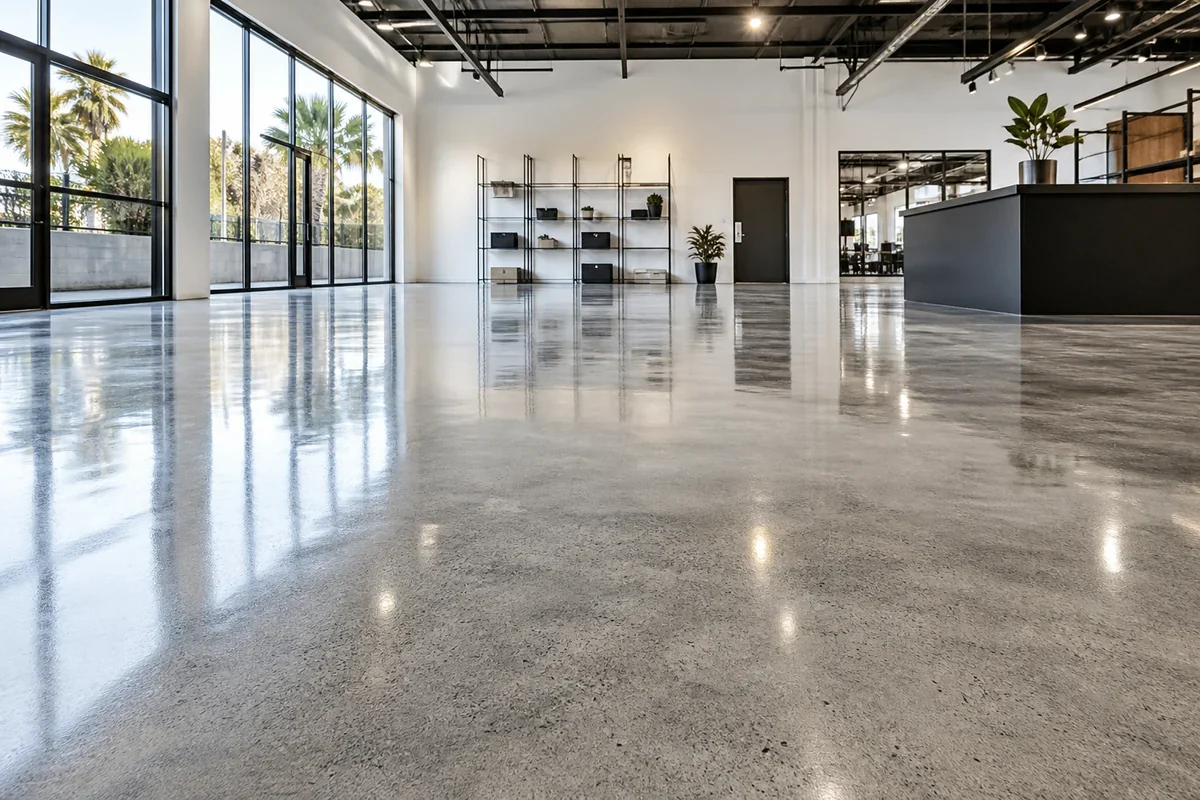
A plain concrete slab hides a lot of potential. With the right treatment, it can become a glowing showroom surface or a swirling, marble-like feature floor. Two finishes lead the design conversation: metallic epoxy flooring and mechanically refined concrete. They look different, behave differently and suit different budgets, so let us compare them.
Two Finishes, Two Personalities
One approach celebrates the concrete itself. The other covers it with a pigmented resin that creates movement and depth. The first feels honest and industrial, while the second feels dramatic and artistic. Neither is better, because each serves a different taste.
Think about the mood of the room. Offices, retail stores and warehouses often favor clean, understated surfaces. Lobbies, salons, bars and showrooms may call for the visual drama that comes from flowing metallic pigments and a deep gloss.
How Polished Concrete Is Made
Polished concrete is created by grinding the slab through progressively finer diamond abrasives, often with a densifier that hardens the surface. The result is a smooth, reflective finish with no coating to peel. The look ranges from satin to high gloss.
Aggregate exposure can be adjusted too. Light grinding keeps the surface mostly uniform, while deeper work reveals stone for a terrazzo-style appearance. Because the slab is the finish, its original quality sets the ceiling for how perfect the final floor can look. That makes honest slab inspection an essential first step before any design is approved.
How Metallic Epoxy Creates Movement
Metallic epoxy is a pour-and-manipulate process. Installers mix pearlescent pigments into clear resin, pour it over a base coat and move it with rollers, brushes or heat. The pigments settle into one-of-a-kind patterns that resemble lava, water or smoke.
No two floors match, which is the appeal. Color combinations can be softened or intensified, and a glossy topcoat locks everything beneath a protective layer. Because it is a coating, it can hide minor slab flaws that polishing would reveal.
Durability and Upkeep Compared
Polished floors resist abrasion well and are easy to maintain with dust mopping and an occasional neutral cleaner. They can show etching if acidic liquids sit too long, and they may need periodic re-polishing in high-traffic zones.
Epoxy topcoats resist stains and chemicals strongly, though sharp impacts can chip them. A protective urethane layer improves scratch resistance. Both finishes reward routine care, and neither needs waxing, which saves ongoing costs.
Budget and Timeline Considerations
Costs depend heavily on the condition of the slab and the size of the space. A slab in good shape may be economical to polish, while a damaged one needs repair first. Metallic work involves more material and artistry, which is reflected in pricing.
Timelines differ as well. Polishing is mostly mechanical and moves in stages. Epoxy installation includes cure times between coats. Ask for a written schedule so you can plan furniture, deliveries and your opening date accordingly. Good communication on scheduling prevents frustration when drying times extend.
Choosing With Confidence
Start by listing what matters most: look, budget, maintenance and the room’s use. Bring photos of finishes you admire and ask for sample boards. Lighting changes everything, so view samples in the space where the floor will live.
Then ask about the slab. A site visit reveals cracks, previous coatings and moisture that influence the recommendation. An honest assessment keeps expectations realistic and ensures the finish you choose will perform as beautifully as it photographs.
Where Each Finish Shines
Polished slabs shine in warehouses, big-box stores, offices and schools where large open areas benefit from a continuous, low-cost shine. Their neutral tone suits modern interiors and hides everyday dust well. Maintenance staff appreciate the simplicity of the routine.
Metallic systems excel where atmosphere matters, including restaurants, salons, entryways, game rooms and residential basements. The surface becomes part of the design story. Owners often choose it for a single feature area, using a calmer finish elsewhere to control budget.
Conclusion
Both finishes can transform a forgotten slab into the centerpiece of a space. The better choice depends on your style, your slab and your schedule. Ask for samples under your own lighting before deciding. For a conversation about samples, options and installation, take a look at avid-epoxy.com and see which direction fits your project.