
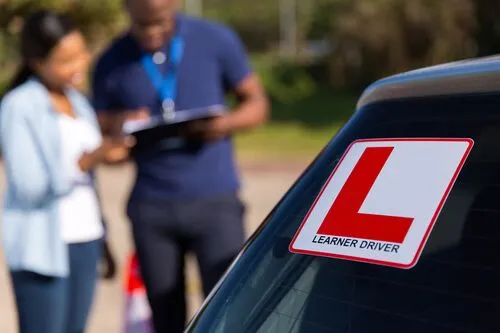
Driving is a significant milestone in the adolescence years for teenagers, as it brings with it a lot of new responsibilities, which involve knowledge, hands-on skills and an extra set of senses. As young drivers transition from driver’s training into driving independently, they may require a degree of structured guidance. Selecting appropriate professional instruction can provide a student with a clear learning path and provide parents with an understanding of the instruction their teen needs. The best program should educate as well as in-the-assist experiences.
Start With a Suitable Program
The first aspect of a Richmond driving school that parents and students need to take into account is the learner’s experience to date. If the teen has never had a driver’s license, a program starting with limited controls and gradually moving into public road scenarios might be necessary.
The program also should meet the student’s overall driver education requirements. Some learners might require classroom or online learning in addition to hands-on training, and others may have met some of the learning needs prior to beginning training.
Knowing where the student is going to begin their learning process will help families to select a training pathway.
Build Strong Driving Foundations
The student needs to acquire the basic skills of operating a vehicle before mastering traffic-related skills. Steering, stopping, accelerating, braking, signaling, using the mirrors and positioning the vehicle in lanes may be covered in early lessons.
These skills will be the basis for further practice. As lessons go on, a student who has gotten comfortable with basic controls can focus more on becoming aware of traffic and making decisions.
Teachers can incorporate the skills one at a time and correct as needed. Even if students practice repeatedly, it is not an urgent process that they need to undergo to make them more consistent.
Develop Road Awareness
It is also important for teen drivers to develop the skills of paying attention to what’s going on around them. When operating a vehicle, it is important to pay attention to traffic signs and signals, pedestrians, bicyclists, parked vehicles and other road users.
A lesson with a structure can help students get in the habit of checking their mirrors frequently and seeing ahead for potential variations in road use.
It’s helpful to be able to predict what’s going to happen. For instance, if the driver in front is slowing down, this will allow a new driver to slow down and maintain a distance.
Combine Education with Practical Lessons
Formal driver education can teach traffic regulations and good driving habits, and hands-on training will give students the opportunity to practice their new knowledge while operating a vehicle.
Drivers ed Richmond TX can be a learning tool for teenagers that will aid in an educational driving experience. Students may be introduced to traffic laws, signs, safe driving practices and more prior to or as they are acquiring road experience.
The two modes of learning have the capacity to reinforce one another. Knowing a rule is helpful, but having to perform the action in real traffic is more beneficial.
Introduce Different Road Environments
As the skills of teen learners increase, they should gradually take part in various kinds of roads. Early practice can be in less noisy areas where students can concentrate on vehicle control.
Busy streets, bigger intersections, traffic lights, commercial areas and other environments with a need for increased awareness can be introduced in later lessons.
This progression should be based on student ability, NOT time. Temporary progression should help to keep training structured, allowing students to move on only when basic skills are reasonably comfortable.
Support From Parents
It is important that parents support and reinforce professional instruction. If supervised practice is appropriate, parents may offer alternative practice opportunities for teens to practice skills they have been introduced to in lessons.
Practice shall be used to consolidate the student’s knowledge and shall be in accordance with requirements for licensing. Parents can help establish the following behavior: mirror checking, signaling, safe following distance and careful observation.
Consistency and calmness in feedback by parents is also useful. Communicating clearly can increase the productivity of supervised practice.
Prepare for Future Testing
Ultimately, some teen learners will have to take a test to obtain their driving license. Preparation should involve practical skills which will help a person to operate a vehicle safely and under control.
Practice can be performed on turns, changing lanes, parking, stopping, speed control and observation. Training should not only be based on the actions in the tests.
The bigger picture is to build skills which are still relevant beyond the test. A teenager needs to know how to make responsible decisions when driving without an instructor or parent by their side.
Encourage Gradual Independence
Gradually phase out support as instruction progresses through the levels of ability of the teenager. Pupils are taught to make their own choices rather than relying on others to make decisions for them.
This can include selecting the right speed, paying attention to traffic and intersections, adapting to the traffic’s changes, and planning for movements.
Gradual independence teaches teens the fact that driving is not just a task to get a license for, but is an ongoing responsibility.
Conclusion
Teen driving instruction should be a mixture of driver control, road awareness and traffic knowledge, and the gradual development of independent judgment. With a good locally available program, young children can have structured guidance, and parents can provide important supervised practice. Emphasis should be placed on the practice of responsible driving, which is the goal beyond licensing. If you’re considering teen driving training and practice in Richmond, you should check out Myfirstdrive.net.