

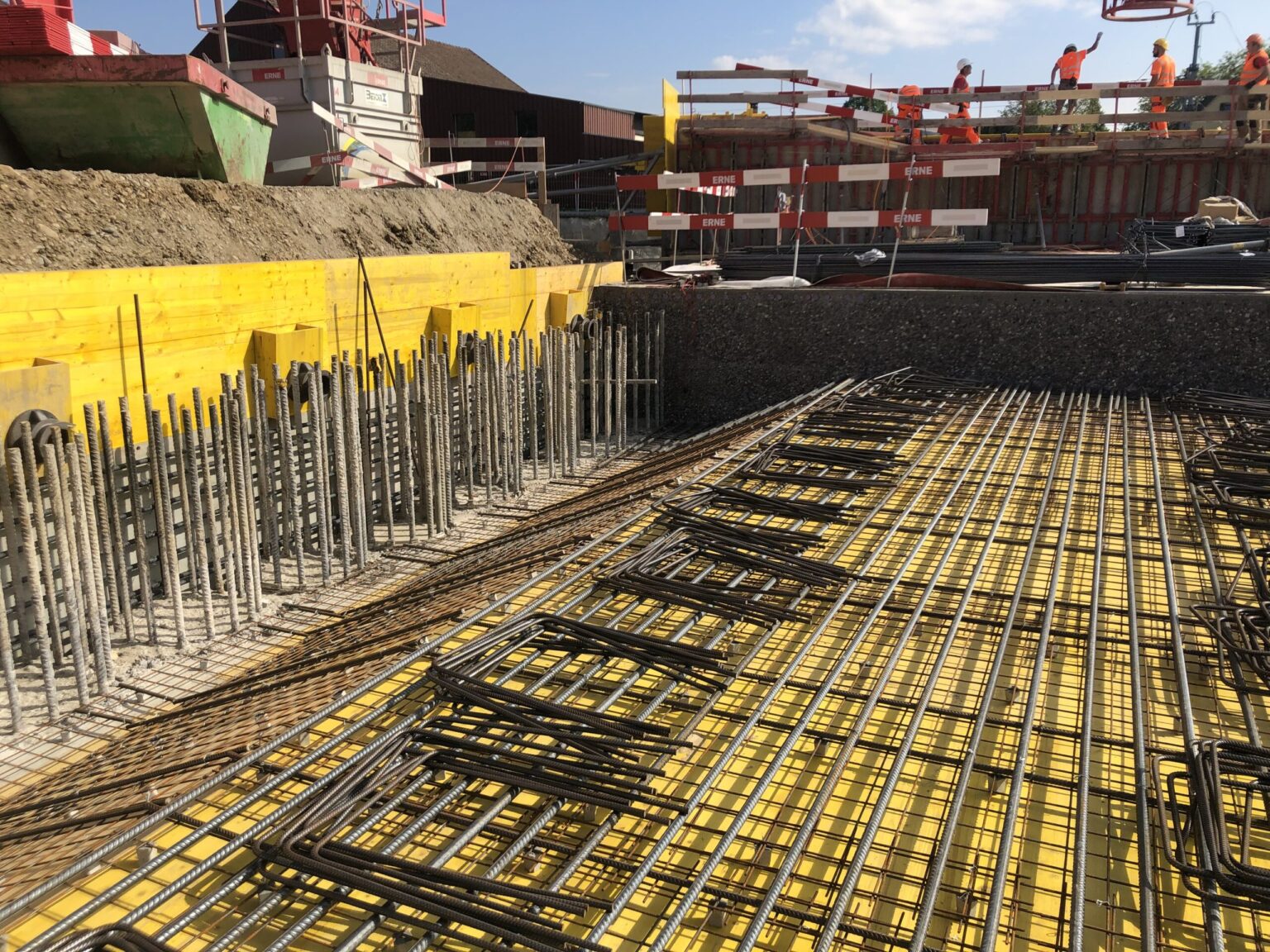
One of the most critical factors to be taken into account in foundation construction is the excavation support. The proper retaining system solution can ensure the surrounding soil remains stable, safeguard nearby structures and ensure safe working during construction. In certain situations, depending on the type of ground conditions and the needs of the project, several solutions can be used, one of which is a tangent pile wall. The knowledge of when this system is suitable can be applied to better plan the project, construct the building efficiently, and ensure its long-term performance.
Understanding The Wall System
A pile wall is formed by laying a line of bored concrete piles with no overlaps. This will result in unbroken continuity of support that can support the lateral soil pressure during excavation.
In contrast to overlapping retaining systems, each pile in a tangent pile wall is independent, but provides support to adjoining piles as part of the stability of the excavation. The design may vary based on the structural requirement, excavation depth and the ground conditions.
Suitable Ground Conditions
The selection of a retaining system is highly related to the construction site properties. The soil composition, the water content of the soil and the loading to be expected are investigated before the method used is determined as the most effective method of support.
For sites where soil is not prone to liquefaction, and where it is not a top priority to provide a complete groundwater cut-off, a tangent pile wall is often chosen. It offers reliable support during excavation and offers flexibility in foundation design for different construction situations.
Common Construction Projects
This retaining technique is ideal for many commercial and infrastructure projects. Crews use this wall setup to dig safe holes for deep basements, office towers, parking decks, bridge ramps, plants and big transit stops.
A tangent pile wall works best when city space gets tight and nearby spots need protection from ground shifts. The relatively simple installation process also enables effective planning of construction.
Benefits During Excavation
Reliable ground support enables a greater level of confidence in excavation works. Strong support walls keep dirt from sliding around. That stops delays on the job site and keeps adjacent plots safe.
A solid pile wall plan gives you steady support all across the line. It also lets big dig rigs move in and out with no hassle. Depending on the requirements of the project, the system can also simplify the placement of reinforcement and installation of concrete when compared to other retaining techniques.
Planning And Installation
The first step to creating a successful retaining wall is to design it in detail. Geotechnical investigations can give useful information on the behavior of the soil, the condition of the groundwater and structural loading prior to the commencement of construction works.
To put them in, workers use new rigs and precise tools to set each post right on line. Constant site checks make sure the posts stay straight, steel sits right, and the mix sets strong for years of good support.
Conclusion
One of the key elements to a safe and efficient excavation support system is the choice of retaining system. In many commercial and infrastructure projects, when site conditions and stable soil conditions are a factor in construction decisions, the use of a tangent pile wall provides reliable ground retention. Successful project outcomes are realized through careful engineering, accurate installation and thorough quality control. For fresh news on retaining wall tools and deep build fixes, pop over to Brextor.com to catch good tips and pro advice.